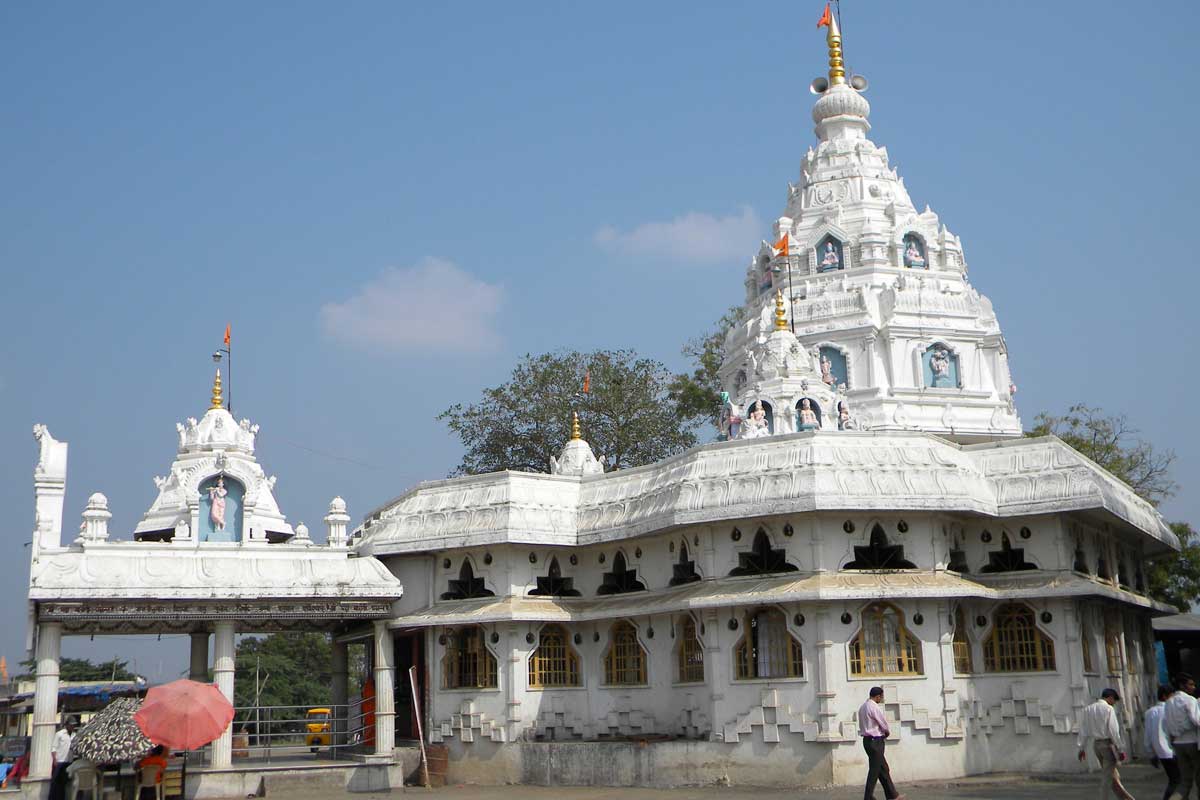
Distance & Time: BhadraMaruti temple, which is located at a Short distance from GrishneshwarJyotirlinga Around 5 Km.
Bhadra Maruti Temple, is an ancient temple of Hanuman in Khuldabad (ancient original name Bhadravati). It is located Khultabad near Aurangabad, Maharashtra. This temple is located at a distance of four kilometers from Verul Leni. This place is very important place for Hindus. The Maruti here is a vow maker and it is a very awakening place. The idol here is sleeping. There are two more places of the sleeping Hanuman, namely the temple at Prayagraj and the third at Jam Sawali in Madhya Pradesh. Bhadra Maruti Temple is considered to be a tourist attraction near Aurangabad. Lakhs of people gather here at sunrise on Hanuman Jayanti Chaitra Purnima and on auspicious occasions like Ram Navami. The worship of Lord Shiva is important in the month of Shravan. Since Hanuman is also a form of Mahadev, Shiva devotees visit Bhadra Maruti on Saturdays.
Story There was a great king named Bhadrasena in Bhadravati. He was an ardent devotee of Rama and used to sing in his praise. One day when Hanumanji was passing through the sky, he heard these songs. He landed at that place listening to these devotional songs sung in praise of Rama. They were mesmerized. And the conjecture assumed a majestic yoga posture. It is called ‘Bhav Samadhi’ (Bhav Samadhi is a yogic posture). When King Bhadrasena finished the song, he was surprised to see the idol of Hanuman in person. He requested Namaskar Hanuman to reside there forever and bless him and Lord Rama’s devotees. Thus Hanuman bhadra i.e. in a calm posture has stayed there forever to bless the devotees.
Every year Bhadra Maruti Temple attracts devotees of Hindu deity Lord Hanuman from all over the country. According to folklore, Khuldabad was once known as Bhadravati and was ruled by King Bhadrasana.
Once when the king was singing a devotional song for Rama, Hanuman, being a devotee of the Lord, came there and was so happy to hear the song that he slept there. So the idol in the temple of Hanuman is sleeping.
Bhadrasana requested Swami to bless this place. This serene temple is one of the best places to visit in Aurangabad, as it is serene as well as charismatic.
Place : Khuldabad, Aurangabad
Time : 5 AM to 12 PM and 4 PM to 9 PM
Entry Fee: Free Entry
Distance & Time: Its a Located ancient hill fort Located 10 Km From BhadraMaruti& It Approximately Takes 30 Min To reach
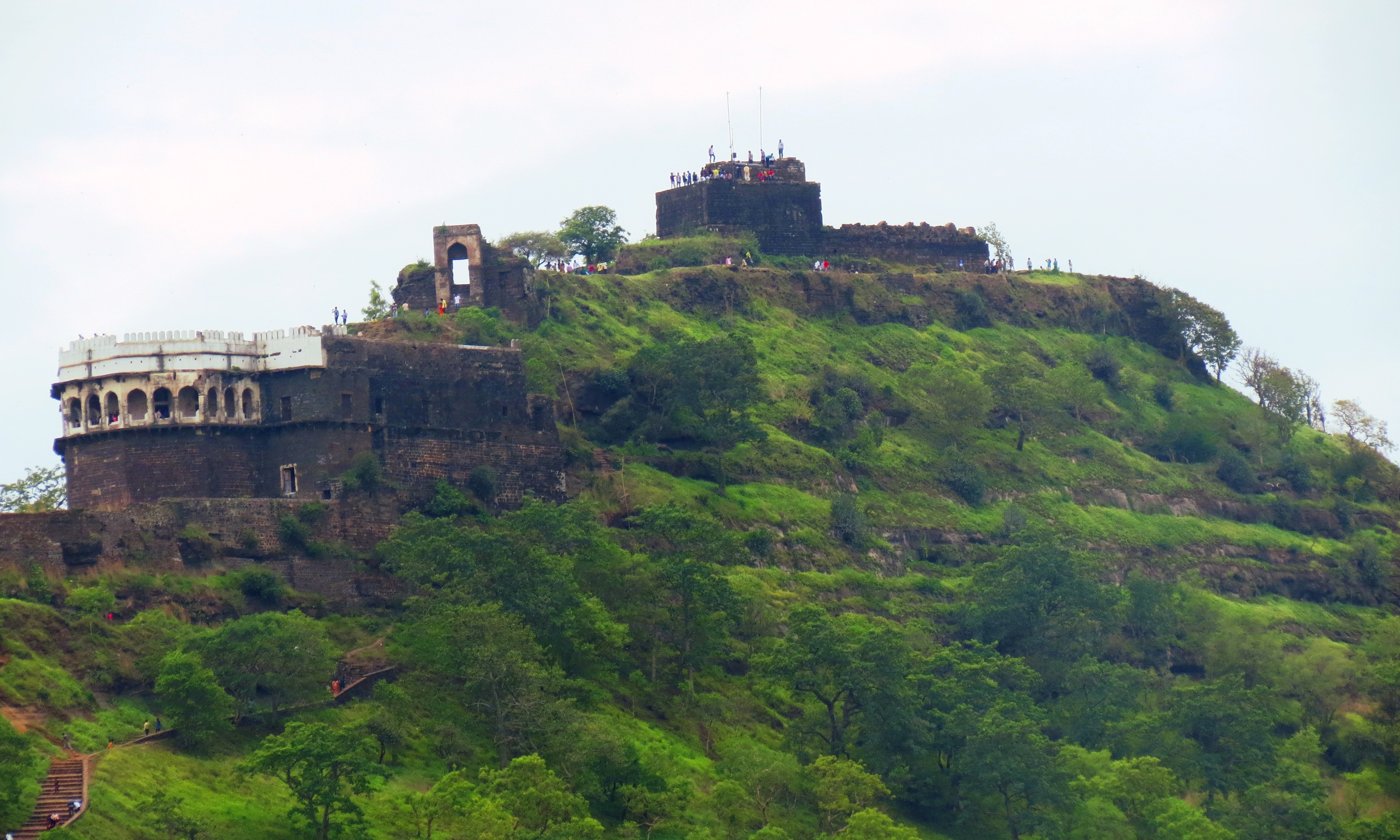
At a distance of 16 km from Aurangabad railway station, Daulatabad is an ancient hill fort situated on the route from Aurangabad to Ellora Caves in Maharashtra. It is one of the best preserved heritage sites in Maharashtra, as well as one of the best tourist spots in Aurangabad.
The historic triangular fort of Daulatabad was built in 1187 by the Yadava king Bhillama V. It is one of the best historical places near Pune. Then this city was called ‘Devagiri’ which means Hill of Gods. The name Daulatabad or ‘abode of wealth’ was given by Muhammad-bin-Tughlaq when he made his capital here in 1327. The region and the fort fell to the Bahamani rulers under Hasan Gangu in 1347 and to the Nizam Shahis of Ahmednagar in 1499. A.D. In 1607, Daulatabad became the capital of the Nizam Shahi dynasty. The fort passed through many hands, captured and recaptured by the Mughals, Marathas, Peshwas and finally held by the Nizams of Hyderabad in 1724 until independence. It is one of the most visited places as part of Aurangabad tour package.
Daulatabad Fort was one of the most powerful forts of medieval times. Built on a conical hill 200 meters high, the fort was protected by a moat and a glacier. The fortification consists of three surrounding walls with bastions at regular intervals. The moat is 40 feet deep with mechanical drawbridges and full of crocodiles. The entire fort complex has an area of approximately 94.83 hectares. A combination of hill and land forts divided into small areas surrounded by fortified walls. The plan of the fortified Amberkot is for the general public. In the Mahakot area, the residential area was available for the upper class of the society due to the walls on four sides. Kalakot is a royal residential area with a double line of fortifications.
As the fort moved from one arm to another, the fort was expanded and structures were added. It includes structures such as step wells, kacheri (court) building, Bharat Mata Temple, Hathi Houd, Chand Minar, Aam Khas, Royal Hammam, Chini Mahal, Rang Mahal, Andheri, Baradari, water tanks and 10 unfinished stone caves. Yadav period. Chand Minar is one of the tallest towers in Daulatabad Fort, approximately 30 meters high. It was built to commemorate the capture of the fort by Alauddin Bahmani in 1447. The four-storied tower was decorated with glazed tiles and carved motifs. It is believed that Chand Minar was used as a place of prayer or a victory monument in earlier times. Baradari was a favorite summer residence of Mughal emperors.
Devagiri is on the border of Aurangabad. There are many buses, cabs and autos available to go from Aurangabad to Daulatabad Fort. It takes 3 hours to visit the major parts of the fort. There is a lot of walking/trekking within the fort and suitable for physically active visitors.
Daulatabad Fort in Daulatabad, one of the most commanding and invincible forts in the entire country; Or Devagiri as it was formerly known, is one of the must visit places near Aurangabad. This magnificent fort is fortified on a conical hill about 200 meters above sea level, about 11 km north-west of Aurangabad.
If you look into the history of the fort, you will realize its importance and strength. The defense of Daulatabad Fort was very strong as compared to other forts in this region or far away.
As for the architecture of this fort, the fort has three layers of defensive walls and its moat, ramparts and terrain are made of solid rocks. A large fire pit in its upper outlet gave the enemy a hard time and also aided their progress. Chandminar, Chini Mahal and Baradari are the most popular and important structures in the fort.
Place :MH SH 22, Daulatabad, Maharashtra 431002
Time :8 AM to 6 PM
Entrance Fee :Rs. 10 for Indians and Rs. 100
its Located 5 Km from Aurangabad City, Takes 20 to 30 Min to Reach
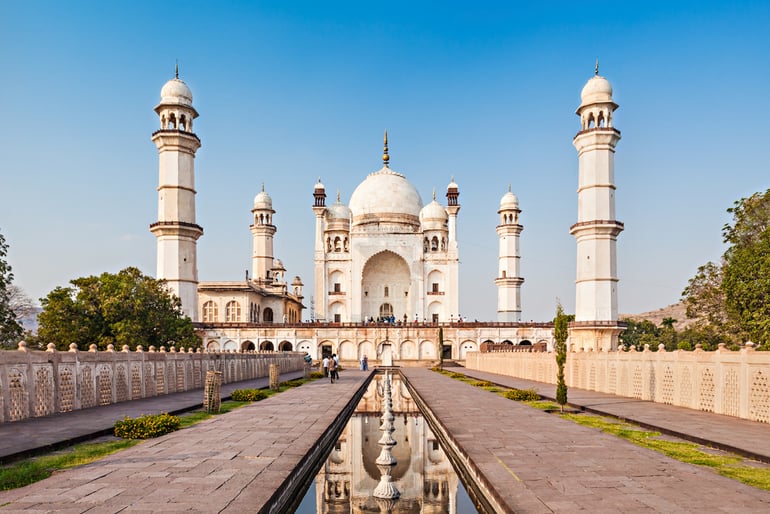
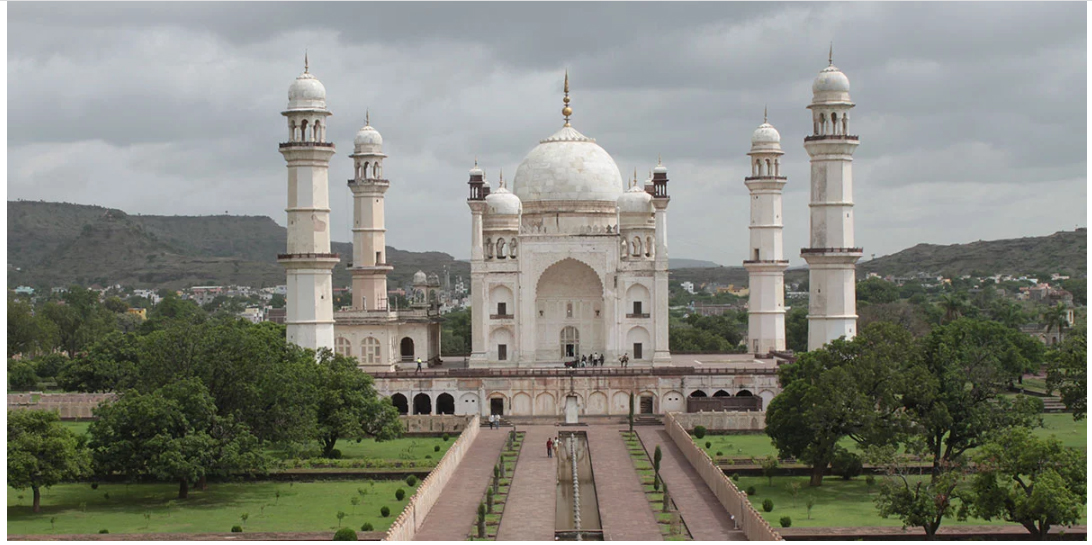
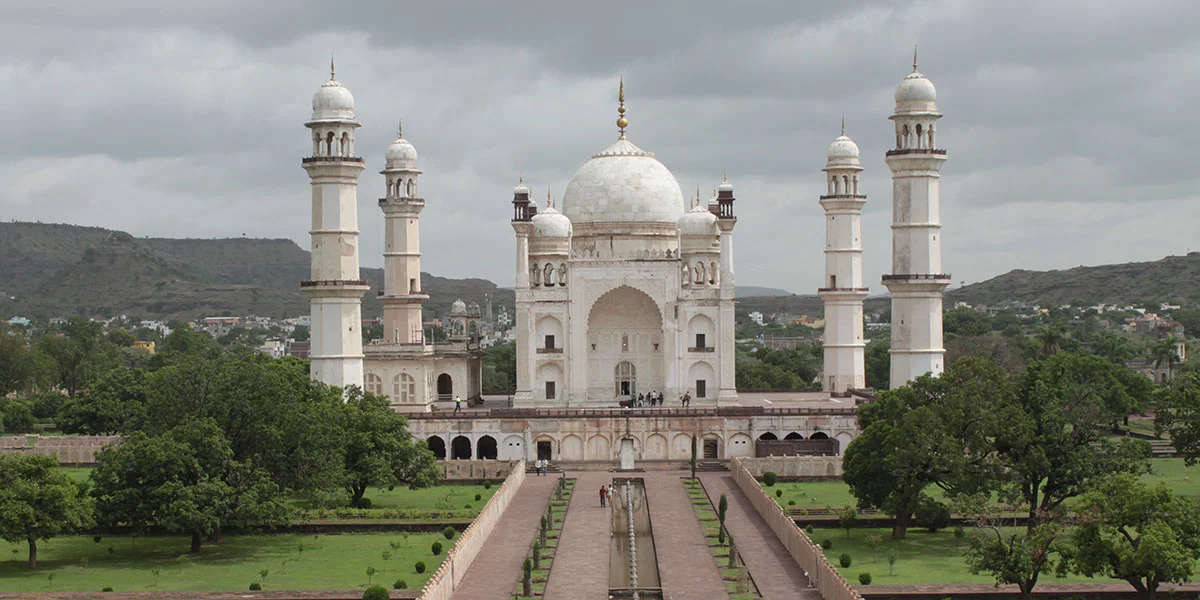
Bibi Ka Maqbara is a tomb built by Mughal Emperor Aurangzeb’s son, Azam Shah, in memory of his mother. Aurangzeb’s wife Rabia Durrani is buried in a grand palace built at Aurangabad. Bibi Ka Maqbara is respectfully called the Taj Mahal of Marathwada.
Rs 2500 (SUV cabs like Toyota Innova, Ertiga120 km / 12 Hrs duty Package) (Toll Included + Parking Extra)
Construction The mausoleum containing this tomb was built in 1679 AD by Malika’s son-Azam Shah during the reign of Aurangzeb. It is made of red and black stones, marble and some white clay. This mixture is called Stucco Plaster. The mausoleum is built on a massive plinth, with Begum Rabia’s tomb in the middle. Marble grids are installed on all four sides of the grave. The mausoleum is designed so that the rays of the sun will fall on it during the day and the moon at night through the roof windows. There are minarets built on all four sides on the grand platform. Sometimes these minarets could be visited.
If you still think that only Taj Mahal is the ultimate symbol of love, then you must visit ‘Bibi Ka Maqbara’, a must visit historical place in Aurangabad. Although not as grand and popular as the Taj, this historic structure symbolizes Mughal Emperor Aurangzeb’s love for his wife Dilrasbanu Begum.
Built on a raised platform, it is guarded by four minarets at its four corners and is reached by a series of steps on three different sides. Encrusted with exquisite marble and adorned with intricate designs, carvings and showcasing undying love, this ancient structure is truly worth a visit when you plan to cover all the major places in Aurangabad.
Bibi Ka Makbara is a beautiful mausoleum in Aurangabad, 5 km from Aurangabad railway station. Maintained by the Archaeological Survey of India, Bibi Ka Mukbara is one of the tourist attractions in Aurangabad.
Bibi-ka-maqbara is dedicated to Rabia-ul-Daurani alias Dilras Bano Begum, wife of Mughal Emperor Aurangzeb. Aurangzeb’s son, Prince Azam Shah, built the mausoleum between 1651 and 1661 AD in memory of his mother Begum Rabia Durrani. This mausoleum is a replica of the world famous Taj Mahal. Also known as the Mini Taj, the mausoleum is much less ornate than the Taj Mahal in Agra. Aurangabad is one of the places that must be included in a tour package.
An inscription found at the main entrance mentions that the mausoleum was designed by Ata-Ullah, an architect, and Hanspat Rai, an engineer, respectively. The marble for this mausoleum was brought from a quarry near Jaipur. Despite the mausoleum layout and surroundings resembling the Taj Mahal, the architecture fails to evoke the magic of the Taj Mahal. It is therefore considered a poor imitation of the Taj Mahal.
The mausoleum is laid in the Charbagh formal garden. It stands in the center of a huge enclosure measuring approximately 458 m x 275 m and is surrounded by high walls with bastions at intervals and open pavilions on three sides. The mausoleum is built on a raised square platform with four minarets at its corners, which is flanked by a flight of steps on three sides. A mosque has been found to the west of the main structure, which was later added by the Nizam of Hyderabad. The narrow walkway from the main gate has a series of fountains in the middle and is surrounded by lush gardens.
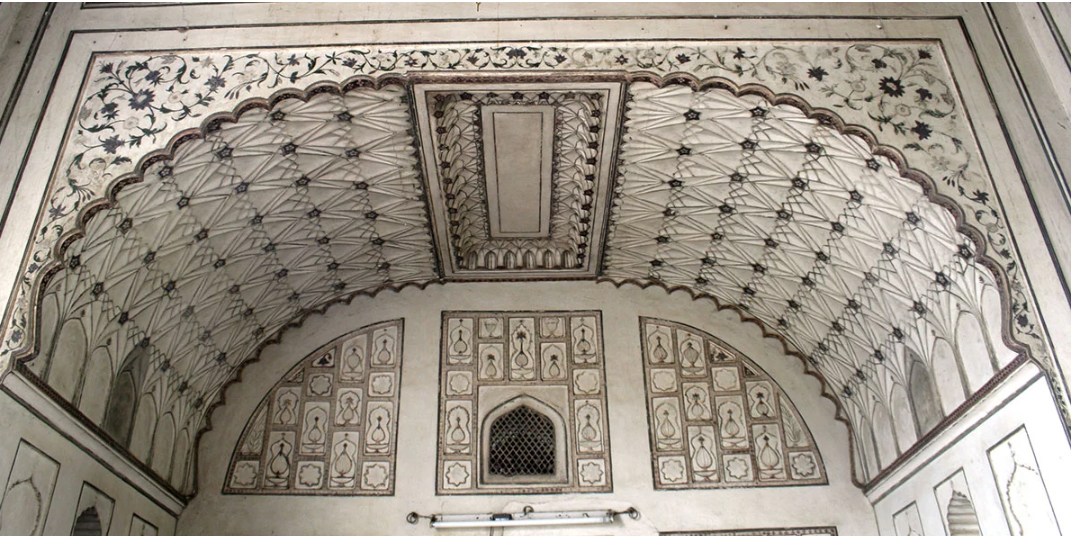
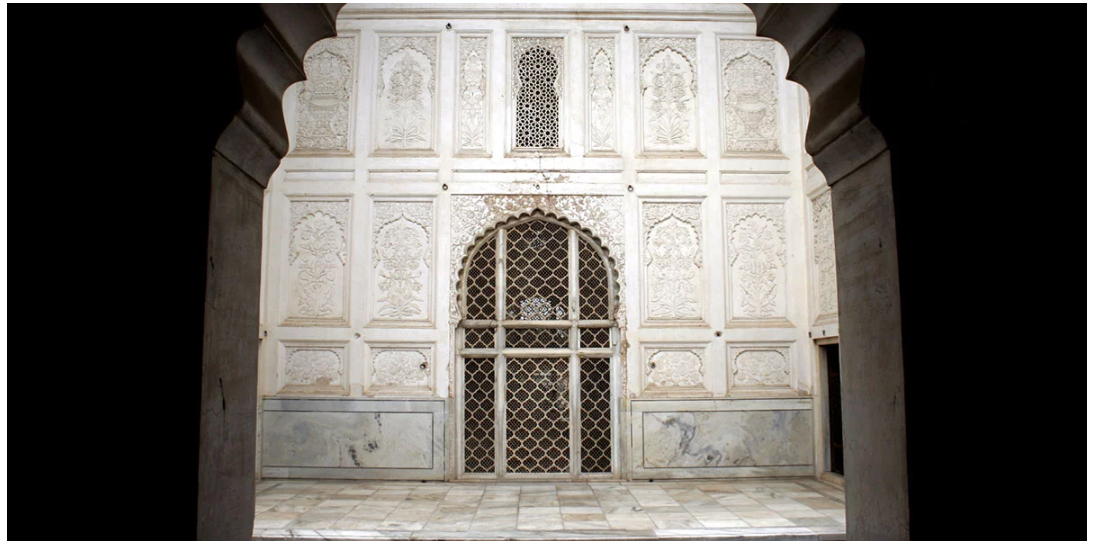
Like the Taj Mahal, this impressive monument has a central dome, surrounded by four smaller domes. Four small minarets near the main structure and four large minarets at its corners. The mausoleum is built of marble up to the dado level. Above the dado level, the base of the dome is lined with a basaltic trap; The latter is again built of marble. A fine plaster covers the basaltic trap and is given a finely polished finish and embellished with exquisite stucco decoration. The remains of Rabia-ul-Daurani are surrounded by an octagonal marble screen below ground level and are of exquisite design, accessible by a descending flight of steps. The ceiling of this chamber, which corresponds to the floor of the mausoleum, is pierced by an octagonal aperture and provided with a low barricaded marble screen. Thus through this octagonal opening the samadhi can be seen even from the ground. The mausoleum is crowned by a dome pierced with panels decorated with floral designs and latticed trays used as supports for vine-like plants.
MTDC organizes a fair every October in celebration of Bibi Ka Makbara. Just behind the mausoleum is an archaeological museum, which houses a rare collection of artefacts and personal items from the Mughal period.
Place :: Begampura, Aurangabad, Maharashtra 431004
Time :8 AM to 8 PM
Entrance Fee :Rs. 20 for Indians and Rs. 100
Distance & Time:From BibikaMaqbarato Panchakki By Car Takes around 15 Min, Its 5 Km Long Distance
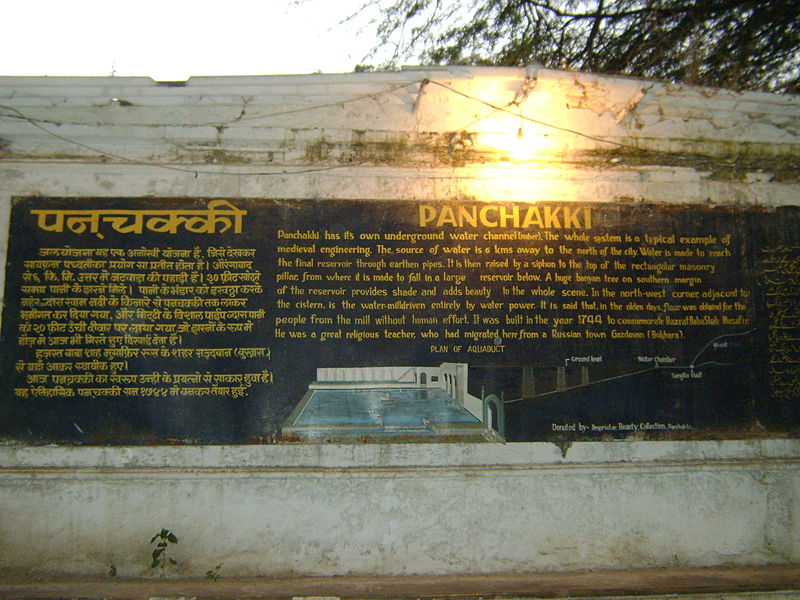
A watermill known as a Panchakki. This monument, located in Aurangabad, Maharashtra, demonstrates the scientific thought process in medieval Indian architecture. It was designed to generate energy through water brought down from a mountain spring. Attached to the dargah of the Sufi saint Baba Shah Musafir, the building is situated in a garden near Mahmud Darwaz and contains a mosque, madrasa, kacheri, minister’s house, inn and houses for zananas.
History Most of the buildings in the dargah complex (including the Panchakki) were built around 1695 by Turktaz Khan, a noble in Nizam-ul-Mulk Asaf Jah’s staff. The rectangular reservoir and fountain in front of the mosque were added 20 years later. By Jamil Baig Khan. Dating back to the 17th century, this ingenious watermill was designed to use the energy generated by water flowing from a nearby spring to turn the large grinding stones of a flour mill. Shah Mosafar died in 1110 Hijri. This water mill was used for grinding grain for pilgrims and disciples of saints as well as for garrison troops.
Today we may be living in a world where science and technology have reached great milestones. However, looking at the Panchakki from Aurangabad, we cannot deny the fact that medieval India was also up-to-date with its own science and technology.
Also known as ‘water mill’; The origin of the name is related to the mill that used to grind grain for pilgrims for darshan, Panchakki was built to meet the energy requirement by bringing down the water from the nearby mountain spring. An underground tap supplies the mill with uninterrupted water, which then descends from a great height to a tank below and generates the power required to run the mill.
Around the mill, you find Baba Shah Musafir Dargah, a vast garden and many other monuments. It also offers a stunning view of the Kham River and the monument to Baba Shah Musafir and some of his disciples’ tombs. One of the scientific wonders of old, this is truly a must-see place to visit in Aurangabad!
Place :Panchakki, Near Government Medical College (Ghati), Aurangabad Pincode * 431001 , Government Medical College, PES Engineering College
Time :: 7 AM to 9 PM
Entrance Fee :: Indian Tourist : Rs.5 / Foreign tourists : Rs.100
Distance & Time:from Panchakki to siddharth garden zoo around 5 Km, It Approx Takes 15 Min For travel by taxi
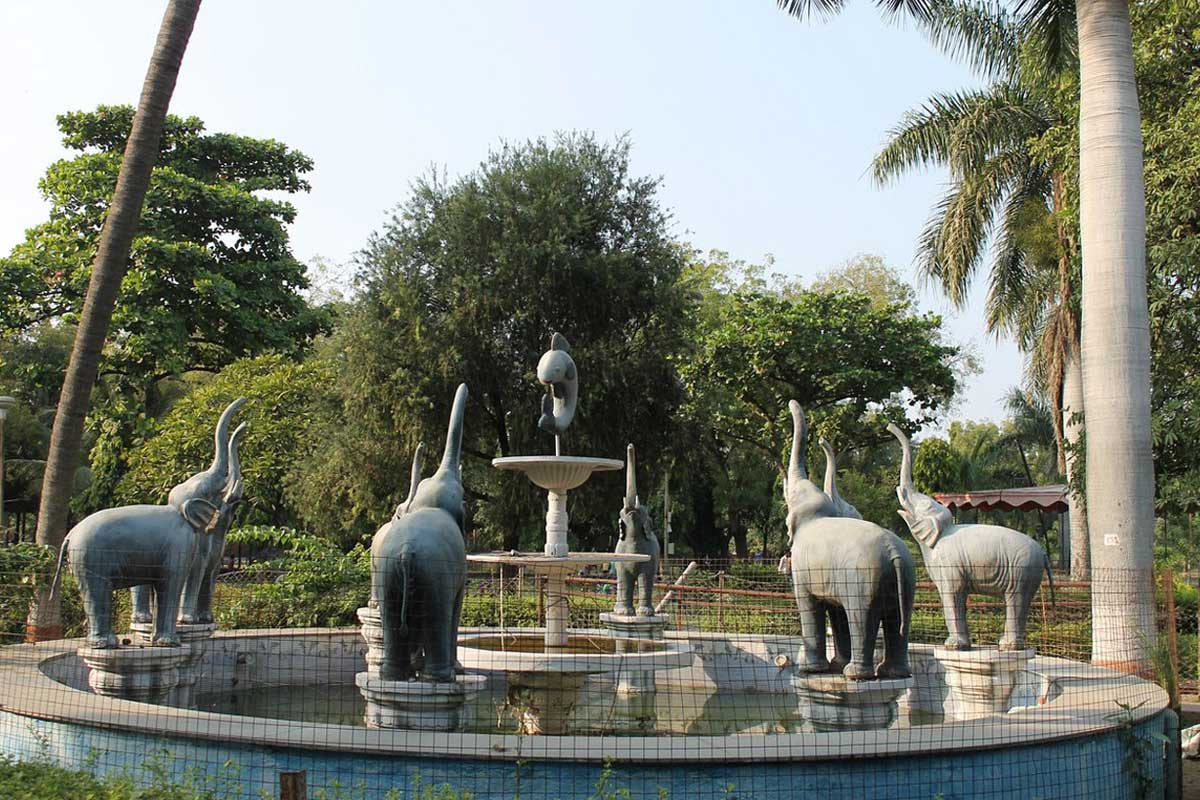
One of Aurangabad’s tourist attractions that promises to make an ordinary day enjoyable, Siddharth Garden and Zoo is an ideal place to visit with the family. It is a landscaped garden with a variety of flowering plants and trees, an aquarium, and more than the usual gardens, a zoo – all in all, a favorite weekend spot for locals.
The garden provides plenty of space for relaxation with a peaceful atmosphere, the zoo has some exotic species on display, from tigers and elephants to crocodiles and snakes. So, whether you want to take your kids out to educate them about wildlife or you’re looking for a beautiful place for a family outing, this park and zoo should fit the bill.
3 km from Aurangabad Railway Station and 4 km from Bibi Ka Maqbara, Siddharth Garden is a sprawling garden, park and zoo at Samarth Nagar in Aurangabad city. It is a popular picnic spot in Aurangabad and is crowded in the evenings especially on weekends.
Siddharth Garden is a landscaped garden spread over a large area and has a green outlook. The garden has 2 parts – one is a lawned garden and the other is a small zoo. The garden also houses a small aquarium, but the major tourist attraction is the Siddhartha Garden Zoo. The zoo is home to many wild animals like tigers, lions, leopards, civet cats, snakes (snake house), crocodiles, emu, foxes, deer, hyenas etc. It was a very enjoyable visit with the kids. A musical fountain and a Buddha statue also adorn the park.
Place :Central Bus Stand Road, Mhada, Aurangabad
Time :9 AM to 7 PM
Entrance Fee :Garden: Rs 20 per person; Zoo – Rs.50 per person